



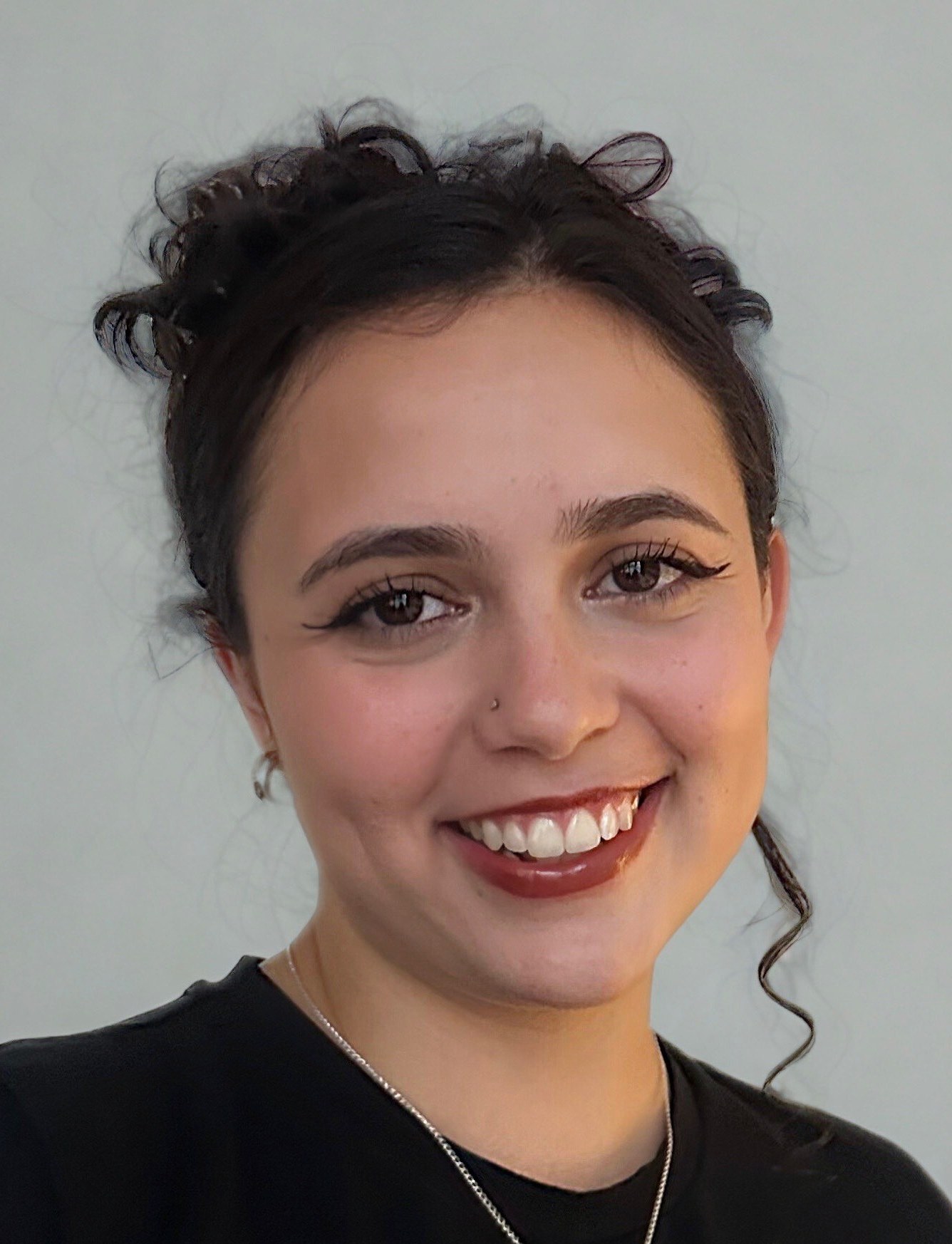
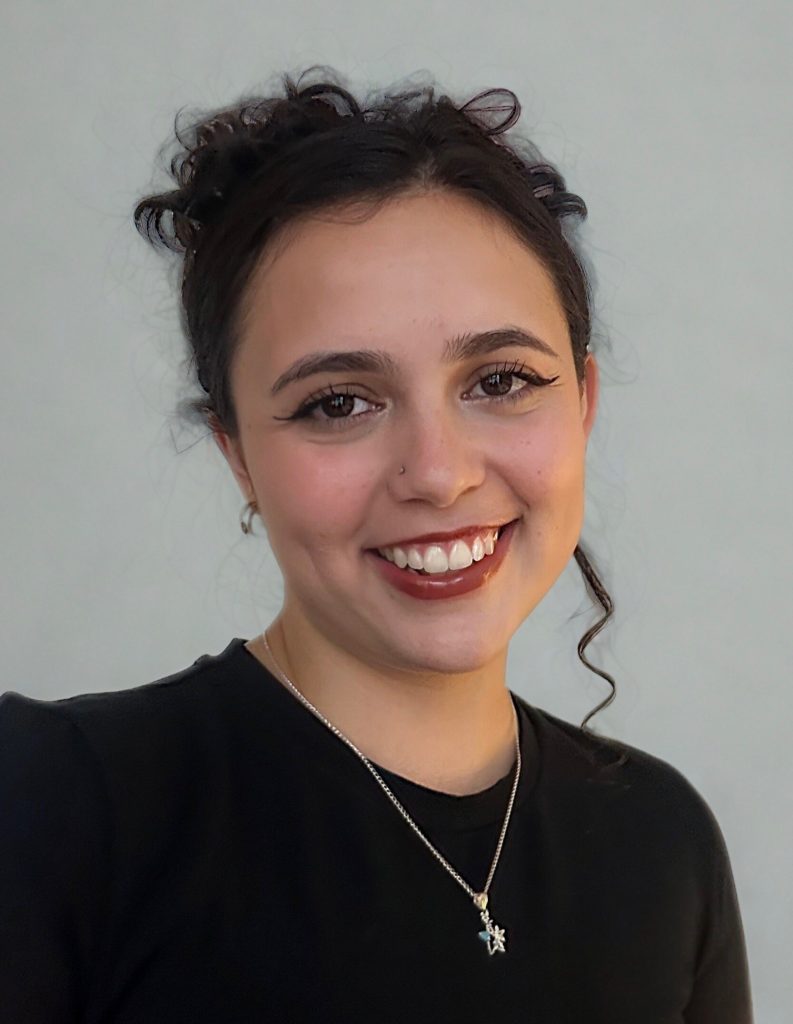
2025 Medina Prize recipient, Citlali Pizarro, talks about developing her voice around communities facing and resisting oppression
For Citlali Pizarro, theater was her first love in elementary school and a long-lasting one that lasted into high school and beyond. But her other passion, writing, came into life in college, and she pursued it more fully by reporting on prisons after the coronavirus pandemic began having profound effects. She had always loved writing and only began considering journalism in college.
Pizarro dove deeper into journalism after receiving fellowships. She eventually fused her love of writing and theater through a fellowship that supported both and launched her into writing more about theater.
On Saturday, Nov. 8, the American Theatre Critics Association will present Pizarro with the 2025 Medina Prize for Excellence in Cultural Criticism, followed by a discussion with Nate Hinkle, Edward Medina’s production partner and widow.
This New York City-based writer and theater producer, who grew up in Santa Clara, Calif., writes about the art, organizing, and lives of people who survive and resist oppression. Publications that have featured her work include American Theatre, Current Affairs, Howlround and 3Views. (Find links to her work here.)
Pizarro has received several previous honors. In 2023, she was named a TCG Rising Leader of Color in Arts Journalism and a fellow at the Eugene O’Neill Theater Center’s National Critics Institute. In 2021-22, she was a PEN America Writing for Justice Fellow, a Shadowproof Marvel Cooke Fellow for abolition journalism, and the inaugural Lin-Manuel Miranda Family Fellow in Connectivity at Woolly Mammoth Theatre Company. She currently works in The Public Theater’s producing department.
The following is a lightly edited excerpt of a conversation between Pizarro and Elizabeth Kramer, co-chair of ATCA’s Belonging, Equity, Inclusion and Diversity committee.
How did you learn about the Medina Prize, and what did you think when you received notice that you would receive this award?
I heard about the Medina Prize through 3Views, a publication I’ve written for that does unconventional theater criticism. Brittani Samuel, a co-editor, was the inaugural Medina Prize winner in 2022. The editors sent out a message to a bunch of their contributors. That’s how I learned about it.
I was really excited when I heard I won the prize — very, very excited. I applied not knowing what would happen. But over the past few years, I have been dedicating much more time and energy to a cultural criticism practice so this felt deeply rewarding having that recognized.
How did you get involved in journalism and theater? Which came first?
Theater definitely came first. I was part of my schools’ theater programs since elementary school. I started doing productions of “Snow White’ and “Cinderella” in after-school theater programs. I loved it and continued doing it through high school and college.
Journalism came a bit later. But in high school, I just loved English class, my favorite subject in school. Writing was very invigorating to me, and I loved doing it. In college, I got more involved in student journalism. I helped found a publication there dedicated to uplifting the perspectives of marginalized students. Even then, I didn’t fully combine my love of the arts with my love of journalism. I wrote a bit about podcasts, radio shows and certain events on campus.
But after college, while working professionally in the theater world as an arts administrator, I craved more stimulation and a deeper way of engaging with art outside of my work. That’s when I realized I could write about it.
In your journalism work, you have written about the prison system. How did that come about?
In college, I participated in student organizing around prison abolition and worked to reallocate some resources of the college I was attending, Swarthmore College, to the work of prison abolitionist organizers and formerly incarcerated people. In Philadelphia, near the college, I learned from brilliant organizers about conceptualizing a world without prisons. I began thinking about how that intersected with a lot of my curriculum and my studies in ethnic and gender studies. I became passionate about anti-prison work. I started writing about the prison system in college, both academically and in an extracurricular way.
In 2020, I graduated and famously did not get to finish my spring semester. I did not get to have a proper graduation. I was just thrust back home in California without a plan. I started observing a lot of the horrors occurring in prisons with the spread of COVID. I was tuned into it because of what I had studied and worked on in college.
Instead of sitting around, wasting away here being anxious, I decided to use that energy to start reporting on the spread of COVID in California prisons. These situations were deliberately obscured from public view. I met some community organizers working to prevent and/or get reparations for prison sterilizations that happened to people in California women’s prisons between the 1970s and as recently as 2013. I started interviewing prison organizers and feminist thinkers whose work involved incarceration and reproductive justice.
What started as something to dedicate my energy to turned into bringing issues to light that I felt were being obscured from public view. I’ve also always been interested in documenting and capturing these kinds of issues — the perspectives of people who experience and resist oppression. I think that shows up in my cultural criticism as well.
Where did that come from — your impulse to understand and examine the details of oppressive systems, how they work and the people they affect?
It came from a lot of things. I have parents involved in Chicano studies and learning from the Chicano movement in California. My mother has an arts lens, a visual arts lens. My father has an educational perspective. He’s done a lot of teaching around Chicano studies. They really instilled values of social justice in me.
Then there is my grandmother, a wonderful storyteller and a working-class migrant Mexican woman. Her life was deeply shaped by structures of oppression I studied and wrote about. She survived and resisted those by telling stories about them and her life. I found them captivating and they sparked my interest in theater and storytelling — responding to storytelling and injustice in general.
When writing about a production, you sometimes provide a window into your life experiences. How often do you do that? Are there rules that you have for yourself to guide you about when to add these aspects to a piece?
There is no formula for how often or how I do it. I mostly do it when I’m watching something and feel immediately impacted personally by it, or it immediately relates to a personal experience. I notice when I am in the audience and have this feeling as an observer about a work of art. It’s like a feeling I can track that existed within me before. Then I feel like putting this into the piece.
Writing is a very personal, vulnerable practice. Normally, when I have the impulse, I don’t restrict myself. Of course, I rely on wonderful editors to tell me when it’s enhancing the piece and when it might be limiting it. My own perspective relates to Melissa Febos’s wonderful essay “In Defense of Navel Gazing.” (The essay is in the book “Body Work: The Radical Power of Personal Narrative.”) In it, she says writing about and indulging yourself in vulnerabilities helps bring your personal, unique perspective to a piece. She also says that when people turn their noses up at these personal narratives, they can easily conform to dominant narratives that uphold the patriarchy and white supremacy. This obstructs marginalized people, especially those who are oppressed, from bringing their experiences, lives and traditions into the canon.
While you write about theater, you also work in theater. How do you balance these two roles — your critical writing and theater production work?
They’re very related to me. Working within the theater industry allows me an insider perspective into how work is made. I can feel myself making assumptions about a show’s budget, for example, or its producing model while watching it, so I have to be cautious if I don’t have context and answers for these. But working in theater gives me a bit more empathy for the artists and the producing containers that the art is built within.
I also can sometimes find myself disillusioned working on the producing side of things, with the sort of bureaucracy and even sanitizing influences that can affect large art-making institutions. Criticism allows me my own creative outlet and my own way to engage with theater that stimulates me and operates outside of those institutions of labor where we make art.
Are there certain critics or writers you emulate or editors you’ve learned from? As a freelancer not having a consistent editor to provide feedback, where do you go for advice on your work? Where do you find editorial support?
I have had support and mentors through fellowships. I had a mentor as a PEN America’s 2021-2022 Writing for Justice Fellow, which was a very, very valuable experience in addition to that PEN cohort. I received industry and career advice, rather than direct responses to my work. I think that’s because most of this was virtual, and we were in different places in the world most of the time. (Citlali stated her dissatisfaction with PEN America’s lack of support for Palestinian writers, a position shared by other writers, including members of Writers Against the War in Gaza.)
My first experience engaging with a group and having built-in support for my cultural criticism practice was at the National Critics Institute at the O’Neill Theater Center. It was really transformative. We wrote responses or works of criticism every evening. NCI welcomed me and two others as part of the Theatre Communications Group’s Rising Leaders of Color cohort.
Participants at NCI responded to each other’s work every day. It was a built-in process that also introduced me to a ton of cultural critics from all over the US, although many were from New York City. I now regularly read all of their work. We have a group chat that is not always the most active. Still, it is really nice. I’ve definitely found support there and, through them, I’m connected to other New York City critics. That’s one way that I’ve built community.
But it’s hard to find people you feel comfortable with and have an ongoing, symbiotic relationship, and who can consistently read your work and provide feedback. I almost always send my work to one of my great friends, Shreya Chattopadhyay, who works for The Drift magazine. She’s a friend from college. But, I wouldn’t say that I’ve found a built-in support network.
I’ve gained a sense of community mostly from seeking out fellowship opportunities. They have offered connection, development and helped my career. I don’t have formal training or a writing degree.
What advice would you offer to people, primarily outside New York City and especially those from historically underrepresented groups?
I’ve never actually been a critic writing outside of New York City. My cultural and theater criticism came from being around so much theater in New York City and working in theater here.
While I’ve never been a critic writing outside of New York City, I returned to California to write a piece about the musical “Real Women Have Curves” that ran on AmericanTheatre.org in January 2024. That was a return home in many ways.
I think looking around at where you come from and uplifting artists from there and engaging rigorously with their work is incredibly important. While there’s a lot of visibility for the New York City theater and arts scene, that doesn’t exist as much in other places. It’s really important to engage with artists where you come from and take their work seriously.
What helped you find your voice in writing about theater?
We talked about this a lot at NCI. What was transformative for me was simplicity. With the first piece I wrote there, I got preoccupied with saying something smart about the artwork. Then I peeled that back and just thought, very simply, what did I like about this and what did I not like. I really wrote simple sentences as well. I found a voice and a style that entails responding in a personal manner that is clear, concise and simple.
Now, any time I’m confused or overwhelmed by the art before me, or I become preoccupied with seeming smart and having good things to say, I return to that advice of responding simply in a visceral, emotional or personal way. It’s about responding as I would as a human rather than thinking of myself as some sort of intellect or person who produces culture.
In addition, I have come to appreciate that others have greatly contributed to my unique perspective and cultural background. These are figures in my life who aren’t necessarily artists, industry people or intellectuals. They have taught me so much and provided me with invaluable insights that make me a unique and better theatre critic.
I also have received validation, legitimization and space to develop a voice around the unique perspectives of people who come from communities facing and resisting oppression. This has helped me go beyond connecting to people in more mainstream, established or institutionalized ways of responding to work.
What would you like to see ATCA and more established critics do for up-and-coming writers and freelancers, particularly those from underrepresented groups?
Connect folks. Connect them with mentors and editors who have experience in the field. That is incredibly invaluable.
Freelancing requires a lot of rigor and initiative. It’s been hard for me to find the time, feel good about the work, and build my own community in my career and development as a writer.
But there are so many possibilities and ways to be a critic and to write about and articulate your feelings about work. Making more expansive connections can provide more support. All of these connections would have been quite valuable to me even earlier on in my journey.
What do you think or hope the Medina Prize will mean for you and your work?
I hope it signifies a renewed commitment and continued growth in my practices as a writer and cultural critic. It’s quite challenging — having a day job and making ends meet while working to develop as a writer. Writing about theater is where I feel my passion lies. I think it’s one of the things that matters most to me, sustains me and stimulates me.
— submitted by Elizabeth Kramer, lightly edited by Martha Wade Steketee.
Sorry, the comment form is closed at this time.