



ATCA at IATC World Congress | Reports from the Field
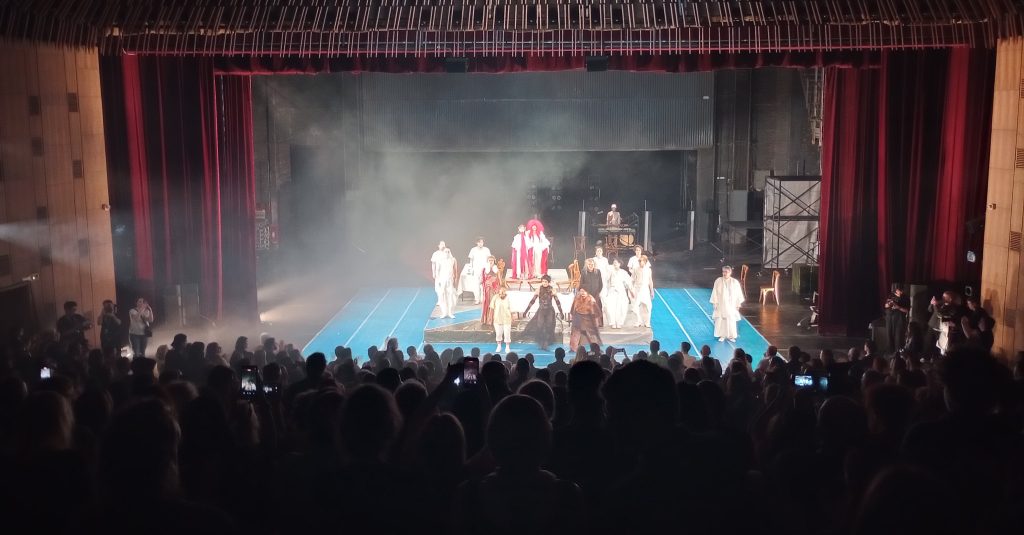
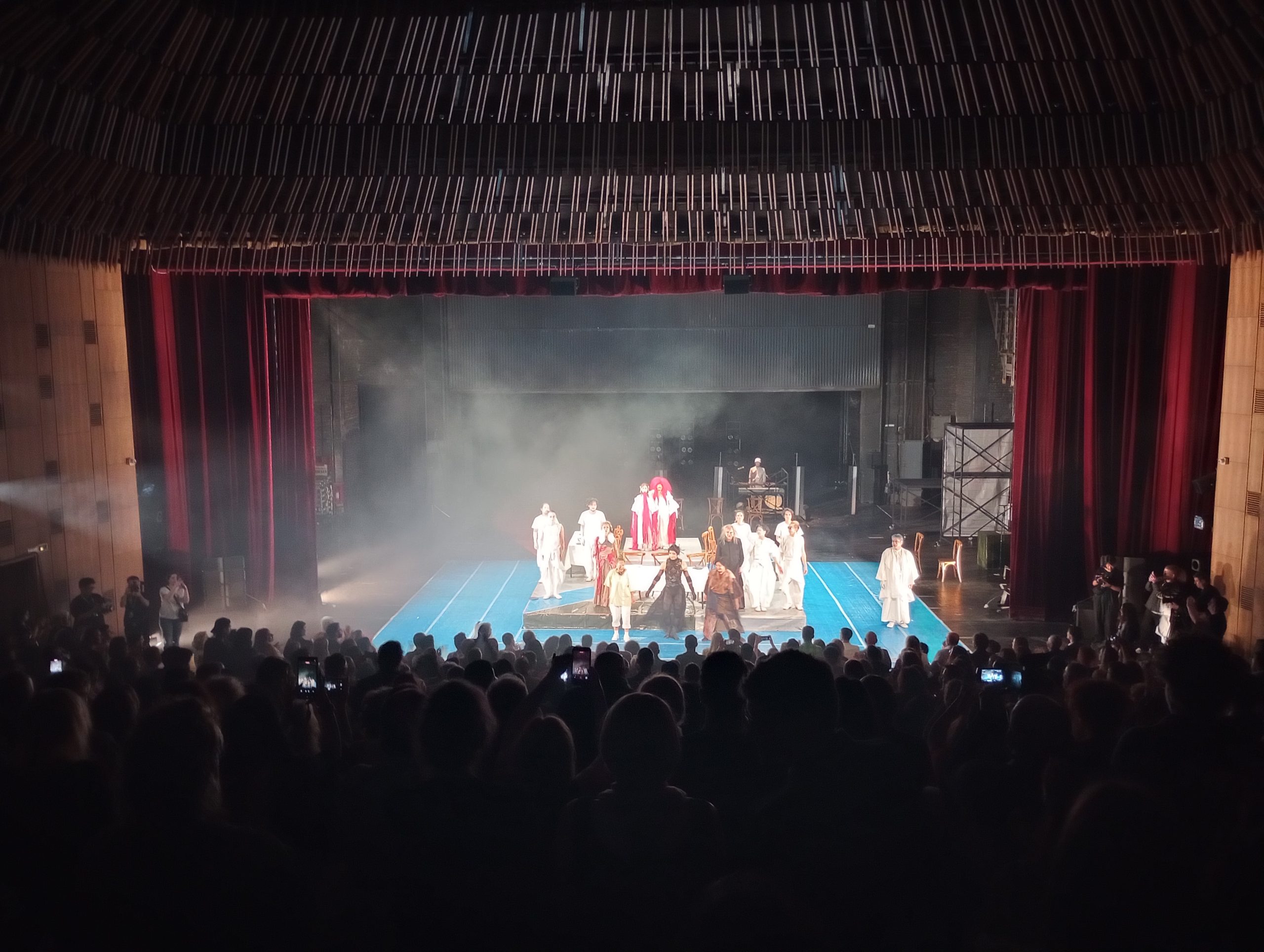
ATCA was represented at the 2026 International Association of Theatre Critics (IATC) World Congress and General Assembly in Craiova, Romania (held May 21, 2026 to May 25, 2026) by Executive Committee Vice Chair Lou Harry and Executive Committee member Amanda L. Andrei.. ATCA is well-represented at IATC events during this era as member Jeffrey Eric Jenkins convened the proceedings as IATC President, and was re-elected to this position during the conference.
Lou and Amanda provided a detailed dispatch to ATCA members through the member newsletter, most of which is included here.
“Housed at Craiova University, official events began on May 21 with welcomes from Lia Olguța Vasilescu, the mayor of Craiova, Vlad Drăgulescu, the director of Shakespeare International Festival and Jenkins. Then it was onto the scholarly work, with papers presented from journalists from around the world, all under the umbrella of the conference theme: “Is Shakespeare Still Our Contemporary?: Rethinking the Bard in a World he Never Imagined.” Topics included “Fathers of Invention: Shakespeare’s Clowns as Prototypes of (Post)Modern Political Demagogue,” “Feminist Strategic Adaptations of Shakespearean Drama,” and “Reimagining Shakespeare from Latin America.”
Coffee and lunch breaks provided time to connect or reconnect with IATC members from around the world.
May 22 centered on AITC business, with updates on finances, presentation by board candidates, and elections, including the reelection of Jenkins as the organization’s president. This was followed by the presentation of the Thalia Prize, AITC’s award for outstanding contribution to the field of theatre criticism, to Maria Shevtsova, professor emerita at Goldsmiths University of London, whose books include Rediscovering Stanislavsky, Directors/Directing: Conversations on Theatre, and Sociology of Theatre and Performance.
The congress was concurrent with the Craiova International Shakespeare Festival (May 21-31), attracting productions from South Africa, Japan, Canada, France, the United Kingdom, and more. Street performers, student shows, puppetry, art installations, and historical demonstrations stretched through the city center to the Shakespeare Village, a small reconstruction of 17th century Elizabethan trade sites along with a modern concert venue and shopping stalls, in the nearby sprawling Romanescu Park.
An additional excursion on May 24 brought some IATC participants to Târgu Jiu, a town known for several magnificent large-scale stone sculptures by Constantin Brâncuși, including The Endless Column and The Table of Silence. By May 25, the American delegation wrapped up, returning to Bucharest and eventually home.”
****************************************
Lou Harry published his separate account of this time in Romania at the IATC congress and the Craiova International Shakespeare Festival. Text from: “Romania offers Shakespeare for international critics’ congress’” by Lou Harry (Theatre Criticism, June 5, 2026)
“I had the honor of representing the U.S. as a delegate to the International Association of Theatre Critics congress in Craiova, Romania in late May. The fringe benefit of that was the chance to attend productions at the wildly ambitious and wide-ranging Craiova International Shakespeare Festival.
Of the four productions I witnessed, the most satisfying and consistently impressive was a homegrown King Lear, anchored by a riveting Claudiu Bleon in the title role. With all audience members seated three quarters around the National Theatre stage, there was no escaping the intensity of the action (or the asshole in the front row who was scrolling on his phone during the climactic scene).
So rich were the performances that I found myself only occasionally glancing at the unobtrusive projected English titles. With the storm downplayed and a greater emphasis on palace intrigue than Lear’s emotional arc, I can see purists being a bit put off, but I appreciated the kinetic energy and up-close intensity it offered.
The most visually exciting of the work I saw was Titus Andronicus Reborn, from the Japanese company Kakushinhan.
Even those unfamiliar with Shakespeare’s goriest work may realize early on that “reborn” here means recontextualizing, adding characters (including a young boy and a crow), incorporating traditional Japanese theater elements, and breaking the fourth wall (the strongest moment for me was a narrator confrontationally asking the audience why they would attend such a show).
Although at 2 1/2 hours without intermission — compounded by an over 20-minute late start — I’d be lying if I didn’t say it was a rough sit. By the time Titus’ notorious dinner party arrived, I had mentally clocked out.
Less interesting was II from Cape Town, South Africa-based Abrahamse & Meyer Productions. A fusion of Christopher Marlowe’s Edward II with Shakespeare’s Richard II, it did no favors to either.
Instead, the two troubled kings engaged in a kind of therapy session with each other, exchanging passages from their plays mixed with original material that trivialized both. Without the context of each original, the drama was drained.
Meanwhile, Mercutio (from Paris, France’s Collectif NOX) was more playful, mixing pop music and rap battling. Clever, at times, it nonetheless felt overly padded, as if the creators were trying to hide the fan fiction nature of the project.
That quartet of shows is just a small portion of what’s offered at the festival. In addition to a long list of additional full productions, the festival includes an outdoor Shakespeare village, free concerts, art exhibitions, lectures and more. If it was a few hours away instead of requiring a 24-hour three-plane journey, I’d happily return.”
****************************************
Amanda Andrei offered additional reflections posted on an LA-based film festival website. Text from: “Dispatch from the Craiova International Shakespeare Festival” by Amanda L. Andrei (SEEfest June 11, 2026)
“Come to Craiova at the start of the summer, and you’ll find this southwestern city in Romania bursting with drama. Since 1994, this cozy Belle Époque city in Romania has hosted the International Shakespeare Festival, filling the stages, streets, and sprawling Romanescu Park with performances and art inspired by the Bard.
Held from May 21-31, 2026, this fifteenth edition of the festival revolved around the theme “Will Matters,” punning on the playwright’s name and concepts of agency and self-determination. How do you make your will matter in a world filled with tragedy? Or how does your will change once you turn the street corner and find a hidden treasure trove?
Indeed, tragedy graced the evening productions. Titus Andronicus: Reborn, presented by Japanese company Kakushinhan and directed by Kyunosuke Kimura, opened the festival, transforming the gory revenge play into a spiritual Noh performance replete with gorgeous masks and robes (design by Hisato Iwasaki and Maya, respectively).
Romanian director Silviu Purcărete’s King Lear stripped the aging monarch (Claudiu Bleonț) from a decorated regality to gritty madness, only to subvert the titular character’s famous cry at the end (“Never, never, never, never, never!”) with muteness. In this Romanian interpretation of the political tragedy, the aching howl of the doomed king and his family pierced so deeply, it saturates the final atmosphere with silence.
If so many dead bodies and failed choices are too heavy to stomach, the streets and smaller performance venues offer an enchanting break and good humor. Turn the corner and you might run into a street parade with jewel-toned performers on stilts and makeup, or intimate art installations.
A larger installation in Mihai Viteazu Square showcases youth creations inspired by A Midsummer Night’s Dream: over 1,000 middle and high school students from Dolj County developed a labyrinth of intricate, candy-colored scenes from the fantasy-comedy. A micro black-box theater with a filmed student performance inside adds a lovely private moment for passersby.
Choreographer Elena Zamfirescu directed 9+ Suitcases, One Tempest, an experimental movement and dance piece in the Museum of Art’s Constantin Brâncuși Centre. Young performers shifted and opened vintage suitcases, stacked glasses, and twisted their bodies in the natural light of the Centre. The images of the sculptor added historical depth to their abstract performances. (Brâncuși is from the region of Craiova and famously emphasized simplicity and essence in his artwork.) Estonian Tricktrek theatre staged a wordless puppet performance through an elaborate wooden castle on wheels in the Promenada Mall in Craiova, delighting audiences of all ages with its craftsmanship.
Film lovers also enjoyed free screenings of classic Shakespeare films and adaptations: Laurence Olivier’s Hamlet, Orson Welles’ Chimes at Midnight, Franco Zeffirelli’s Romeo and Juliet, Jean-Luc Godard’s King Lear, Gus Van Sant’s My Own Private Idaho. Other films screened included Mamoru Hosada’s animated Scarlet, loosely based on Hamlet, and the short Romanian documentary Yuri Butusov and Other Tales about the famed Russian director and his avant-garde methods. The stylish Biergarten Craiova also showcased student short films in their “UNAT-Cinema” evening program, an initiative from the Universitatea Națională de Artă Teatrală și Cinematografică “I.L. Caragiale” in Bucharest.
Constructed in 2024 for the thirtieth anniversary, the Shakespeare Village was a unique addition to the festival. Small wooden sets with Elizabethan era trades and activities (such as weaving, fencing, and leathermaking) encircled a grassy area for storytelling, dance tutorials, and fencing demonstrations. Gift stalls and food trucks lined the perimeter. A concert stage and shaded lounge area provided beanbags and low wooden tables to enjoy a beer or cocktail in between shows and events. At night, rock concerts and light shows filled the Village as audience members jammed, danced, and made merry.
From stage to square, Craiova’s international festival shows that Shakespeare is more than a historical playwright, but a reason to gather and party.”
****************************************
— Assembled by Martha Wade Steketee.
Sorry, the comment form is closed at this time.