CRITICISM IN CONTROVERSY

Thursday
Jul282011

To tweet or not to tweet - that is the critical question

You’re leaving a performance you are to review. Your deadline is two days away, but you have a thought you want to share with your followers on Twitter. Or you have a video camera in your cell phone and you can do a stand-up of a 15-second comment. Do either of these break an embargo? What if the tweet or video don’t include critical assessment so much as an observation on audience reaction or a one-time only event, such as a cell phone’s ringing out mid-performance? The rules are hazy in the new world of instant communication. Jonathan Fischer, Arts Editor at Washington’s City Paper, wrote on the topic last fall. Click here.

Thursday
Jul282011

'Ohio critic's tough words elicit rough reaction'

Thus the headline on John Moore’s 2006 Denver Post story on the dust up between Cleveland Plain Dealer critic Tony Brown and Cleveland Play House artistic director Michael Bloom, occasioned by the former’s review of “Rabbit Hole.” Moore writes, “The relationship between a theater critic and the community he serves is far more precarious than it is for TV, film and music critics because nothing is more local than theater. That makes what any critic has to say about it far more personal.” Read Moore’s column here.

Friday
Feb112011

Ongoing critical scuffle over 'Spider Man'

The latest take on the ongoing war of attrition is surveyed in this Feb. 8 NY Times account of some reviews of Spidey’s ongoing previews.

Previously, Leonard Jacobs had a juicy take on the “Spider Man” situation in the Jan. 17 Huffington Post (it’s rich in links). He wrote of “the anachronistic kabuki of theatre journalism,” compared protests to “dinosaurs roaring in denial about the asteroid that detonated in their feeding ground” and laughed at the idea that we’re gatekeepers: “The gate is wide open.”

Sunday
Jan162011

'Defy the Elite!'

Thus the headline to A.O. Scott’s Jan. 16 NYT column on the death/change/whatever of criticism. Having resolved “no panels on the State or Future or Death of Criticism … no thumb suckers for the Sunday paper on the history or the essence of the critical profession,” he finds himself back in the fray with some entertaining thoughts.

Thursday
Jan132011

'Will criticism survive? Does anyone care?'

Nov. 5 — ATCA member and former membership chair Julie York Coppens, former criticJulie Coppens at the Charlotte Observer, is now at the Educational Theatre Association as associate editor of Dramatics Magazine (aimed at young people) and Teaching Theatre Journal. Stimulated by our O’Neill conference, she has taken on the challenge of describing the troubled state of our profession, without any talking down to her audience: read it here. See also her related coverage of “What makes a critic”, her brisk history of criticism from Plato to ATCA and excerpts from The Theater on Critics panel at the O’Neill. 

Thursday
Oct282010

Critic taken off beat, legal fur flies

“Right to an opinion – or wrong?” is Michael Phillips’ Aug. 12, 2010 Michael PhillipsChicago Tribune column about the lawsuit by classical music critic Donald Rosenberg against the Cleveland Orchestra and his own paper, the Cleveland Plain Dealer, which took Rosenberg off the Orchestra beat in response to complaints about negative reviews. A former ATCA member who was theater critic for a half-dozen papers before he became Tribune film critic, Phillips was  Perspectives in Criticism speaker at ATCA’s 2010 O’Neill conference.
 Here’s the link.

Thursday
Oct282010

Old Story: Pulitzer Board Rejects Drama Jury's Choices

For the 2010 Pulitzer Prize in Drama, the 17-member Pulitzer board rejected the three finalists selected by its own five-member Drama jury, instead awarding the Pulitzer to “Next to Normal.”This is an old story. The Pulitzer for Drama began in 1917 (although no play that year was deemed fit). After various controversies, the New York Drama Critics Circle Awards were started in 1935 specifically to counter the Pulitzer’s reluctance to recognize “morally questionable” drama — like Eugene O’Neill’s. Eventually the Drama Pulitzer modified its morals clause, but that wary spirit persists in a reluctance to recognize the new and a decided preference for shows staged in New York, especially if still running and preferably on Broadway, so the (heavily New York-centric) board members who don’t usually go to the theater can play last-minute, mid-town catch-up. The board’s distrust of its own jury’s recommendations was signaled recently when the jury was instructed not to rank its choices but simply to present a pool of three names from which the senior group could pick a favorite — or, as in this case, not pick one at all.

This year’s frustrated drama jury was made up of Charles McNulty (chair), critic of the LA Times; John Clum, Duke University drama professor; Nilo Cruz, playwright; David Rooney, just fired chief theater critic of Variety (scroll down this page for more on that); and Hedy Weiss, long-time Chicago Sun-Times theater and dance critic. Their recommendations were Rajiv Joseph’s “Bengal Tiger at the Baghdad Zoo,” Kristoffer Diaz’s “The Elaborate Entrance of Chad Deity” and Sarah Ruhl’s “In the Next Room or the Vibrator Play.”

Read McNulty’s expression of dismay, a more Olympian response from Ben Brantley of the other Times, and Leonard Jacobs’ “Pulitzer Implosion.” And go to our ATCA BLOG page, where members of our New Plays Committee react to the Pulitzer decision, with some reference to their own work in selecting the Steinberg/ATCA and Osborn Award winners.

Thursday
Oct282010

Theresa Rebeck has some things to say about critics

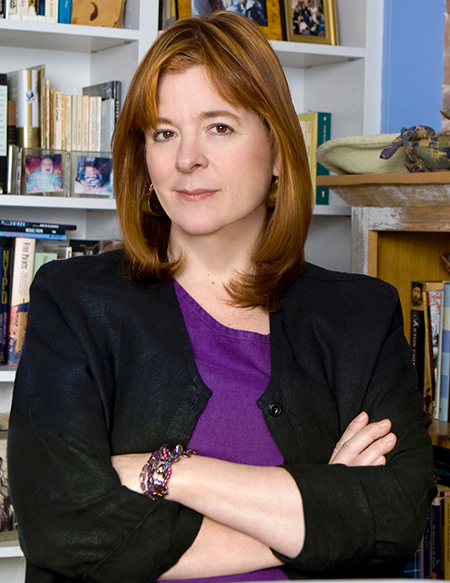
The ATCA website is for news about theater critics and Theresa Rebeck criticism, not about the theater in general. But playwright Theresa Rebeck’s stem-winding March 15 Laura Pells keynote address is more than theater news in general, and it certainly bears directly on theater criticism. So follow the link to read it, and for an extra pleasure, read John Weidman’s introduction, as well.

Tuesday
Oct262010

Another critic axed

Critic David RooneyVariety, the so-called show biz bible, has jettisoned the full-time theater critic position held by David Rooney, simultaneously saying it will continue to review theater with the same frequency. (How many of us have heard that before?) Links to two commentaries: “The iceberg of serious, informed theatrical criticism lost another chunk,” says Kenneth Jones in playbill.com; “The critical bloodletting continues,” says Adam Feldman in Time Out N.Y. One of the best reads on the subject is “Eliminate theatre critics at your peril” by David Cote in The Guardian. He praises (yes, praises) critics as “the dung beetles of culture.

Tuesday
Oct262010

Tonys give critics back the vote; ATCA had its say

March, 2010 — The critics (in this case, the 20-some members of the New York Drama Critics Circle) will get back the Tony Awards vote next year, according to a March 25 announcement by the Broadway League and American Theatre Wing, the Tonys’ joint proprietors. Last July, they threw out the baby with the bathwater by disenfranchising the 100-strong First Night List, replete with editors and others in addition to critics. Now they’ve apologized for what was “perceived as a slight against … working theatre critics … we deeply regret if offense was inadvertently given.”

ATCA entered the discussion on Aug. 7 with a letter of protest from the executive committee which suggested doing exactly what the Tonys have now done — return the vote to the NYDCC (“and such other critics as seems best”). A report by Randy Gener on “Critics’ Right to Vote?” in the Dec. issue of American Theatre quoted liberally from that letter, which was echoed in the lead letter in AT’s Feb. issue.

Only a few members of the NYDCC are ATCA members — after all, ATCA was started in 1974 specifically to give voice to critics outside New York — but it has always been important for ATCA to express solidarity with theater critics everywhere. Charlotte Martin of the Broadway League contacted ATCA to acknowledge its helpful contribution to the debate.

The text of that letter is below, following links to some of the discussion that followed the Tonys’ action. Not all commentary was negative: see Michael Feingold.

*     *     *     * 

NY Times, July 14, 2009: “Journalists Will No Longer Be Voting for Tony Awards,” by Patrick Healy (includes original statement by the Tony Management Committee)

Time Out, New York, July 14: “This just in: Tony Awards nix crix,” by Adam Feldman

Variety, July 15: “Tony Awards anger journalists; Press removed from voting pool protest,” by David Rooney and Gordon Cox

Guardian.co.uk, July 16: “The Tony awards need their journalist voters,” by Karen Fricker

New York Post, July 17: “A Whole New Ballot Game: No Tony Vote, But Pres Can Take Revenge,” by Michael Riedel

Pittsburgh Post-Gazette, July 28: “The Tony Awards unwisely disenfranchise the critics, and great is the wailing thereat“ by Christopher Rawson

The Clyde Fitch Report, Aug. 7: “Critics Chair Tells Tony Awards: ‘Don’t Be Stupid!’ They Reply: ‘Nyeh, Nyeh, Nyeh’”

Village Voice.com, Aug. 11: “Theater Criticism Reconfigured: The Internet (unlike the Tonys) lets everyone have their say – to a point. What would Wilde think?,” by Michael Feingold

The Arts Fuse, Aug. 17: “Theater Criticism: The Happy End of Business as Usual,” by Bill Marx


ATCA’s letter, August 7, 2009


To: Nina Lannan, Chair, and Charlotte St. Martin, Executive Director, The Broadway League; and Theodore Chapin, Chairman, and Howard Sherman, Executive Director, American Theatre Wing

Now that the initial uproar has eased, the Executive Committee of the American Theatre Critics Association urges the Tony Management Committee to reconsider its recent decision to disenfranchise theater critics who vote for the Tony Awards.

Among the artists, craftspeople and producers who comprise most of that electorate, critics are the least biased voters with the broadest, best informed view of the theatrical scene. Their participation enhances the legitimacy of the Tonys, which otherwise would look parochial and self-congratulatory.

Critics are also natural participants. All around the country there are similar theatrical awards programs in which critics play a leading role; ATCA itself administers several. Disenfranchising critics from the Tonys fits no sensible rationale. Analogies to the Oscars and Emmys miss the point that theater is always alive and local — whereas movie and TV critics are many and widely dispersed, New York theater critics are limited and well placed to help celebrate Broadway.

If the unspoken aim is to reduce the number of free tickets producers must provide, it would be better to take the vote away from the editors and columnists on the 100-person first night list, leaving the genuine critics. Or just start anew with the New York Drama Critics Circle and add other critics as seems best. Of course, the greatest saving would be to refuse all voters’ requests for extra tickets or second viewings.

But these are housekeeping details, well within the competence of the Tony Committee. Whatever the perceived problem may be, tossing out the critics isn’t the answer. This is a time when the Fabulous Invalid and the beleaguered critical community should be making common cause for their art. Haven’t the American Theatre Wing and Broadway League always supported that ideal?

[signed]

Christopher Rawson, Pittsburgh Post-Gazette; Chairman, ATCA Executive Committee

BACKGROUND: ATCA is the only national organization representing American theater critics. Founded in 1974 by (among others) Henry Hewes, Elliot Norton, Richard Coe, Edith Oliver and Dan Sullivan, it sponsors yearly conferences and symposia and sends members to the seminars and congresses of the International Association of Theatre Critics. It makes a recommendation for the regional theater Tony and votes on the Theater Hall of Fame, and through its Foundation, it annually awards the $40,000 Harold and Mimi Steinberg/ATCA and M. Elizabeth Osborn new play awards and $10,000 Francesca Primus Prize.